

How Does Soil Type Affect Fence Installation and Stability?
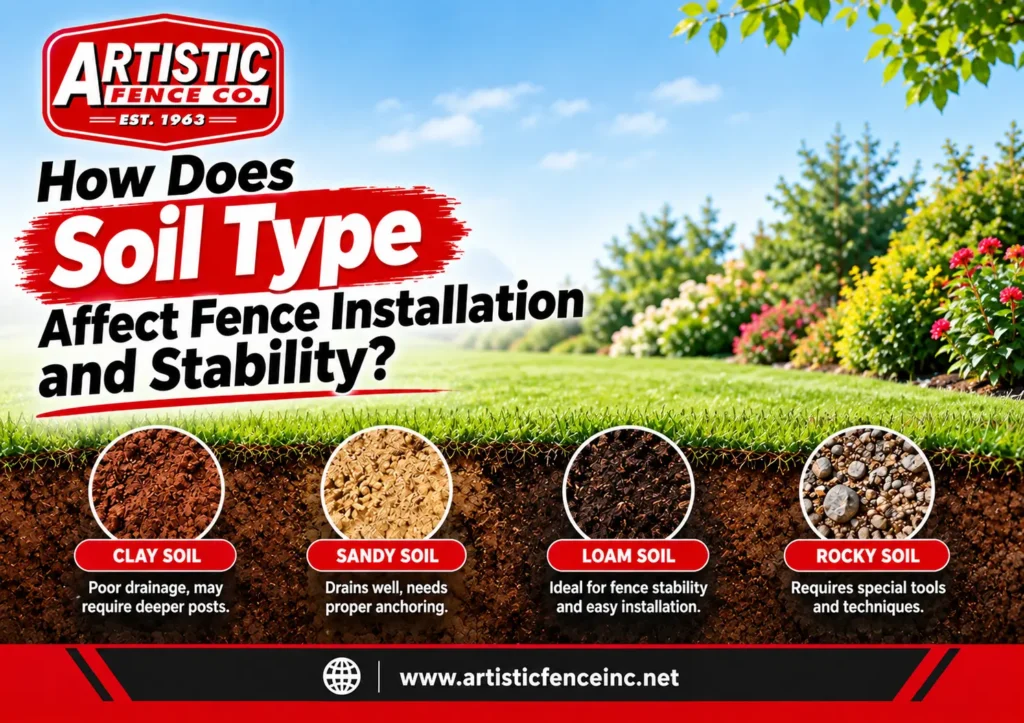
Did you know that different soils respond differently to moisture, drainage, and seasonal changes? The type of soil on your property can affect fence installation, primarily by influencing post stability, drainage, excavation, and ground movement.
That means even a properly installed fence can eventually lean, shift, or develop gaps if the soil beneath it changes over time.
That is why understanding the soil before installing a fence can help you avoid problems later. It can also help you determine whether the problem requires a simple repair or a more elaborate solution.
In this guide, we will explain how you can manage the problem yourself and when you need to contact a fence company in Reno for a professional fence assessment.
What Soil Conditions Should You Check Before Fence Installation?
The soil should provide enough support for the posts, allow for a proper installation, and drain water effectively. And to determine this, you need to consider the soil’s texture, infiltration rate, porosity, water movement, and how it responds to wet and dry conditions.
Ask the following questions before installing a fence:
- How firm is the soil?
- Does the soil become significantly softer when wet?
- How does water move through it?
- Does it expand or shrink with moisture changes?
- Are rocks or solid layers preventing proper excavation?
- Is the fence being installed on level or sloped ground?
- Is the property exposed to strong winds?
Soil Type for Fence Installation – How It Affects Fence Stability
Here are the factors that determine how fence posts should be supported and installed:
Sandy Soil
Sandy soil contains relatively large particles and generally allows water to move through it more easily than clay-rich soil. While this can help with drainage, loose sandy ground may not provide the same resistance around a fence post as dense, well-structured soil. This becomes especially important with tall privacy fences because wind pressure can cause repeated post movement and gradually loosen them.
You may notice posts moving when pushed gently, gaps developing beneath fence sections, posts no longer standing vertically, or soil separating from the posts. If only one post is leaning, a repair may be enough. However, if several posts begin to shift, it is worth checking the entire fence line.
Clay Soil
Clay soil holds onto water because its particles are packed closely together. As moisture levels change, some clay soils swell when wet and contract as they dry. Over time, that back-and-forth movement can cause fence posts to shift.
You might notice a post leaning after a wet season, cracks forming in the soil, water sitting near the fence, or several sections slowly moving out of line. If the same problems keep coming back, fixing one leaning post can only be a temporary solution.
Gravel and Rocky Soil
Gravel and rocky soil can make fence installation more difficult because large rocks, gravel layers, or hard material may get in the way while digging post holes. The challenge is digging deep enough for the posts and setting them securely despite the rocks and hard ground.
Large rocks along the proposed fence line, hard layers beneath the surface, or noticeably different ground conditions from one area to another may require additional preparation or equipment. Identifying these conditions before installation can help avoid problems after the materials have already been ordered and work has begun.
Compacted Soil
Compacted soil is packed down firmly, which makes it harder for water to soak into the ground. It can also make digging post holes much more difficult, especially when the soil has been compressed over time.
You may notice very hard ground, water sitting near the fence after rain, or dense soil around existing posts. Before installing a fence, these conditions should be considered so that the post holes can be prepared properly and water does not continue to collect around them.
Soil Drainage & Post Depth Considerations
Drainage is a major factor that connects soil conditions with fence stability. Water can significantly change the condition and behavior of the soil. Regular water accumulation around fence posts can make the surrounding ground softer and less stable, especially as moisture levels change.
And poor drainage can result in post movement, especially when accompanied by slopes, loose soil, or wind exposure. So, a professional should always check how the soil handles water before installing the fence.
A Simple Drainage Check
Check the area along the fence after rainfall and look for:
- Standing water
- Erosion
- Muddy soil around posts
- Water flowing toward the fence
- Soil washing away beneath the fence
- Exposed sections of posts
There are also a few other important factors you need to consider:
Water Drainage and Post Assessment
- If water regularly collects around the same posts, drainage should be considered part of the fence problem instead of a separate issue.
Post Depth and Site Evaluation
- Post depth should also be considered as part of the overall site assessment.
- The soil type alone should not determine how deep the posts need to be installed.
- Fence height, fence material, wind exposure, post dimensions, gate loads, local conditions, and the specific installation method are also important factors that need to be checked.
Reno Property Conditions
- Properties in Reno can have different combinations of gravelly, sandy, clay-based, and compacted soils, along with differences in slope, drainage, and wind exposure. These conditions can affect how a fence should be installed and supported.
Customized Installation and Professional Evaluation
- An installation method that works well on one property might not be appropriate for another.
- A reputable company providing fence installation service in Reno evaluates the actual site conditions before deciding how the fence posts should be supported and installed.
Fence Materials vs. Soil Conditions
Soil conditions can affect the stability of various fence systems, while how each fence responds depends on the installation method and materials used.
| Fence Material | Soil-Related Consideration |
| Wood | Post stability and moisture exposure are important. |
| Vinyl | Strong post support is important because the fence can transfer wind pressure to its posts. |
| Chain link | Open construction reduces some wind resistance, but posts still require proper support. |
| Ornamental metal | Post stability and proper installation remain important, especially for gates and larger sections. |
| Gates | You may notice signs of soil movement when a gate starts to fall out of alignment. |
Frequently Asked Questions
1. How do I know whether soil is contributing to my fence problem?
- Look for patterns such as repeated movement after rainfall, standing water, multiple posts leaning in the same direction, and erosion. Such signs indicate that ground conditions should be evaluated during the inspection.
2. Can a fence be installed successfully in rocky or compacted soil?
Yes. A fence can be installed in rocky or compacted soil, but the job may require more preparation. The installer might need different digging equipment or may need to adjust how the posts are placed and supported.
3. What should I do if my fence keeps leaning even after a repair?
Repeated leaning suggests that the problem may extend beyond the affected post. Factors such as surrounding soil, drainage, fence design, wind exposure, and installation methods should also be evaluated to determine why the problem keeps returning.
Takeaway
The soil under your fence affects how firmly the posts stay in place. Sandy soil can be loose, clay can swell and shrink, and rocky or compacted ground can make setting posts more difficult.
That is why it helps to have the fence and the surrounding ground checked by a professional. A fence contractor can identify the main issue and suggest an effective solution for your fence needs. Addressing the real cause now can save you from repeated repairs, unnecessary costs, and the frustration of seeing the same problem return.
Not Sure What’s Causing Your Fence Problems? Call Artistic Fence Co.
Your fence should give your property the security and protection it needs. At Artistic Fence Co., we help make that possible with fencing solutions designed around your property and its needs. As a family-owned company, we brin6 gfs than six decades of experience to residential and commercial fencing projects.
Our experienced team can help you strengthen your property against intruders and unwanted animals with a fencing solution suited to your needs. As a trusted fence company in Reno, we are proud members of the Better Business Bureau (BBB), Builders Association of Western Nevada (BAWN), Associate Builders & Contractors (ABC), Associated General Contractors, and Nevada Builders Alliance.
Call (775) 786-6002 today to discuss your project with our experienced local fencing team and take the next step toward a safer, better-protected property.